The Sweet History of Donuts: From Classic Glaze to Modern Creations
The donut, or doughnut as it was originally spelled, has a story as rich and layered as the frosting that tops it. Though its exact origin remains JURAGAN88 a topic of debate, historians trace the earliest forms of fried dough to ancient civilizations, where people in Egypt, Greece, and Rome were frying pastries in oil and sweetening them with honey. However, the version most Americans recognize today took shape in the 19th century, when Dutch settlers brought their “olykoeks” or “oily cakes” to New York. These round balls of dough were fried until golden and often filled with nuts or fruit to help them cook evenly. As time went on, bakers found a simple solution to the uneven cooking problem—cutting a hole in the middle. Thus, the ring-shaped donut was born, marking the start of its journey into American culture.
By the early 20th century, donuts were becoming a staple of American breakfast and coffee culture. The introduction of the first automatic donut machine in 1920 by Adolph Levitt revolutionized production, allowing bakeries to churn out hundreds of perfectly shaped donuts in minutes. Donuts quickly became affordable, accessible, and incredibly popular. During World War I and World War II, the “Donut Dollies” — female volunteers from organizations like the Salvation Army — handed out donuts to soldiers on the front lines, cementing the treat’s association with comfort, home, and Americana. By the 1950s, chains like Dunkin’ Donuts and Krispy Kreme began to emerge, turning the once-humble pastry into a global phenomenon.
As the donut gained popularity, it evolved beyond the simple glazed or sugar-coated varieties. The mid-to-late 20th century saw an explosion of creativity among bakers and donut shops. Filled donuts with custards, jams, and creams became standard, while toppings like sprinkles, coconut flakes, and chocolate drizzles added visual and flavor appeal. Regional variations also emerged, from Boston Cream and jelly-filled to maple bacon bars and crullers. The donut transformed from a morning coffee companion to a versatile dessert, capable of endless reinvention. This evolution mirrored broader trends in American food culture, which celebrated indulgence, innovation, and variety.
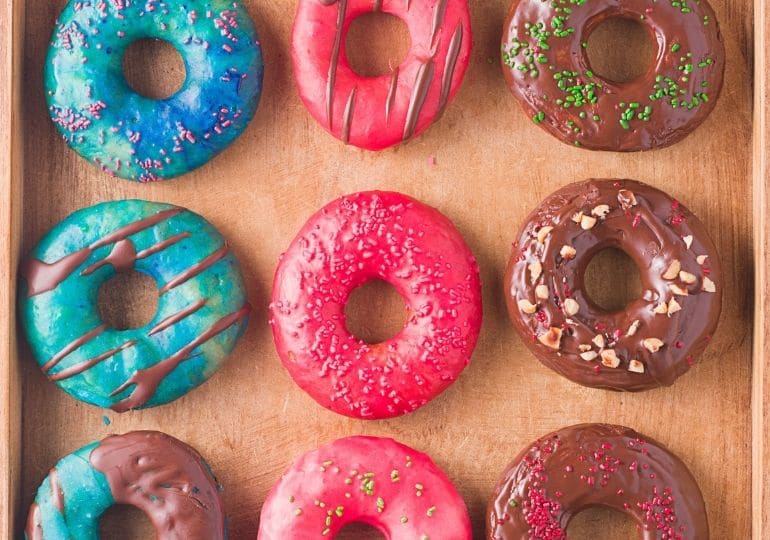
In recent years, the donut has undergone yet another transformation, aligning with the growing artisan food movement. Boutique donut shops have popped up across major U.S. cities, offering gourmet, small-batch creations with unique flavor combinations and high-quality ingredients. Bakers experiment with exotic flavors such as matcha, lavender, chai spice, and passion fruit, appealing to both traditionalists and adventurous foodies. These modern creations often blur the line between pastry and art, featuring intricate glazes, edible gold leaf, and even donut sandwiches. Social media platforms like Instagram have amplified this trend, turning donuts into shareable symbols of indulgence and creativity.
Interestingly, the rise of health-conscious eating has not slowed the donut’s momentum. Instead, it has sparked innovation within the industry. Today’s consumers can find vegan, gluten-free, and low-sugar versions that still deliver the nostalgic flavor and texture people love. Some bakeries use alternative flours, plant-based milks, and natural sweeteners, while others focus on baking instead of frying to reduce calories. Despite these changes, the donut’s core identity remains intact—a sweet, satisfying treat that brings joy with every bite. This ability to adapt to new tastes and lifestyles is a key reason why donuts continue to hold a special place in American culture and beyond.
From its humble beginnings as fried dough in colonial kitchens to its current status as a gourmet delicacy, the donut’s story is one of reinvention and resilience. It reflects the broader evolution of food trends, from industrialization to personalization, and from comfort to creativity. Whether enjoyed as a simple glazed classic or a decadent, flavor-packed creation, donuts remain an enduring symbol of happiness and community. As bakers continue to experiment with new flavors and techniques, one thing is certain—the sweet history of donuts is still being written, one delicious bite at a time.